
The Origins of Lunar Zebro
Lunar Zebro did not start as a space mission. It started as a robotics project at TU Delft, where students were experimenting with small legged robots and trying to understand how simple systems could perform in complex environments.
Back in 2013, the first Zebro robot was developed as part of an international robotics effort. It took inspiration from platforms like RHex robot, focusing on a design that was mechanically simple, robust, and able to keep moving even when conditions were not ideal. From the beginning, the goal was not to build a single perfect robot, but to explore a concept. That meant testing, adjusting, and building again.
Over time, many different versions of Zebro were created. There were very small versions, like Pico, and larger experimental platforms. Each version was part of the same question: can this system scale, and does it still work when you change its size? That process was not always straightforward, but it showed something important. Zebro was not just a robot, it was a flexible platform that could adapt to different applications.
At the same time, TU Delft was building experience in space engineering through nano-satellite projects and international collaborations. Students were learning how to design systems that have to operate far from Earth, under strict constraints, and without the possibility of repair. These two lines of work (robotics and space) were developing separately, but they started to overlap more and more.
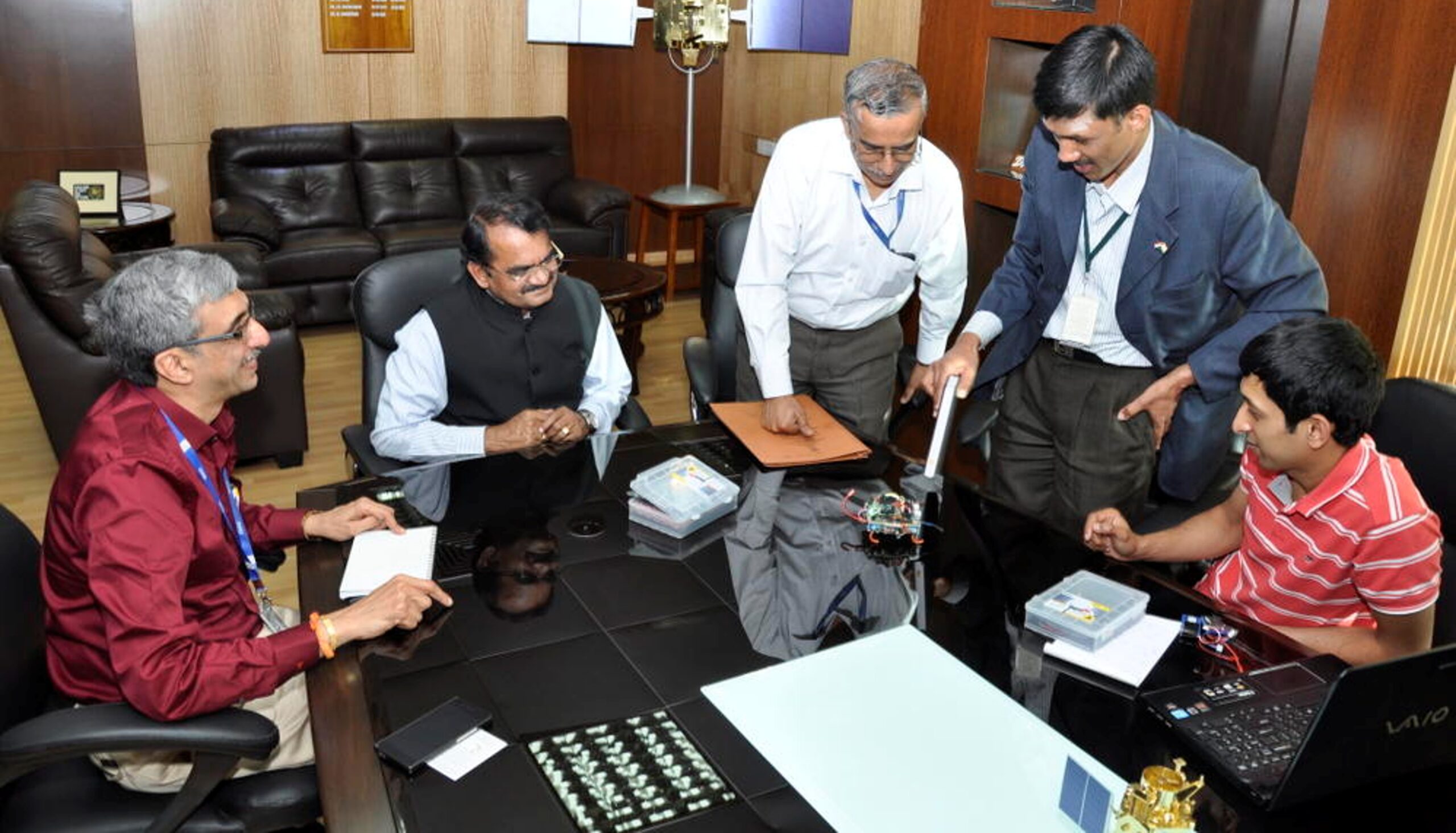
The idea of using Zebro in space did not appear as a single breakthrough moment. It developed gradually. During interactions with Indian Space Research Organisation, a Zebro robot was demonstrated in a simple, unprepared environment. There was no special setup or controlled testing environment. It was just the robot, doing what it was designed to do. It performed reliably, even under those basic conditions.
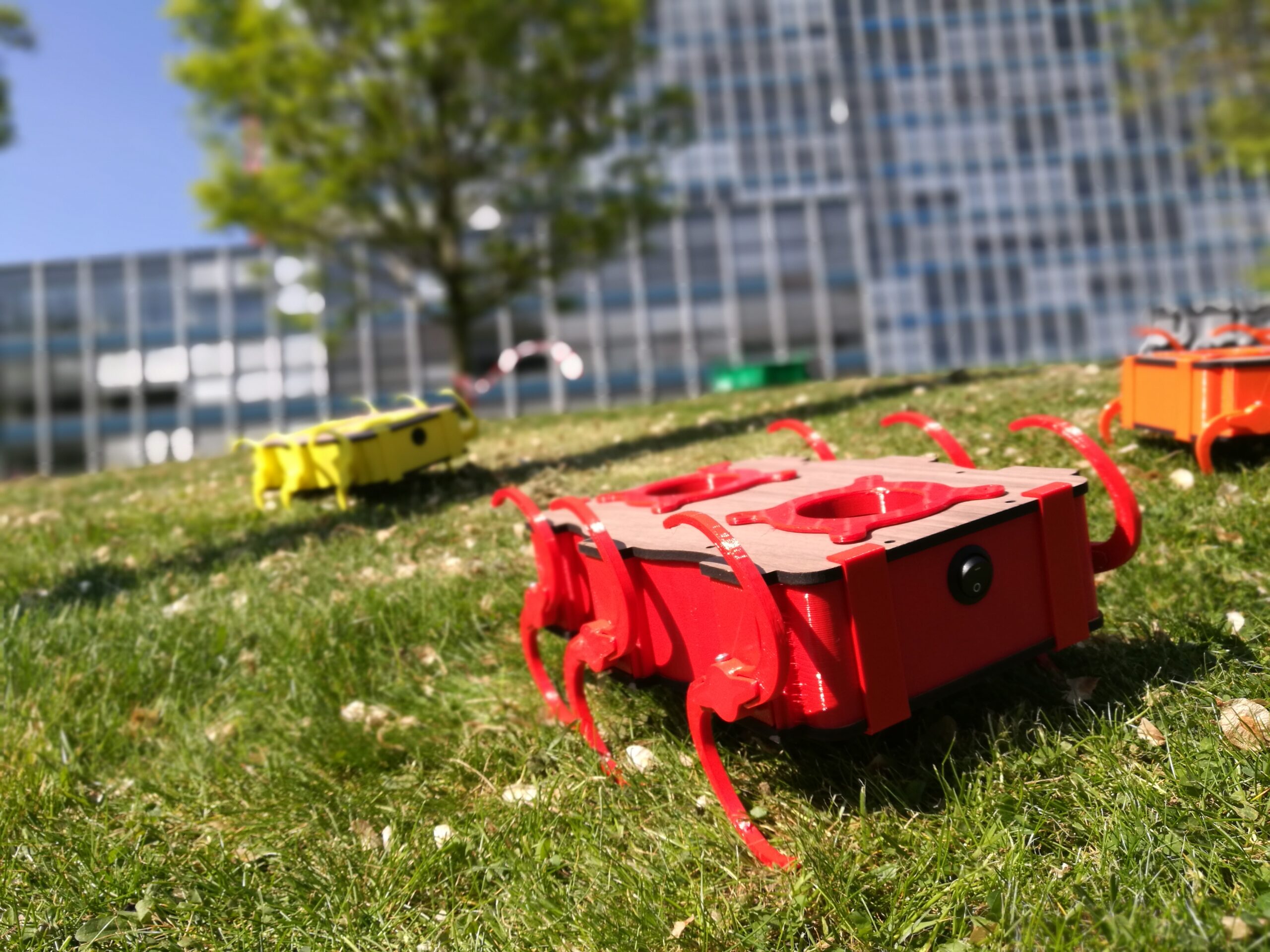
From there, the direction of the project started to change. Instead of thinking about one larger, more complex rover, the team explored a different approach. Around 2017, the focus shifted towards using multiple smaller robots working together. The Micro Zebro became the preferred size, as it offered a balance between being compact and still having enough capacity to carry sensors or other payloads.
The idea of a swarm became central. Rather than relying on one system, you use many. If one robot fails, the others continue. Tasks can be divided, shared, and redistributed. This makes the system more resilient, which is exactly what is needed in an environment like the Moon. Conditions there are harsh: extreme temperature changes, radiation, dust, and complete isolation. In such a setting, reducing the risk of total mission failure becomes essential.
Lunar Zebro grew out of that thinking. Not as a single rover, but as a group of small robots that can cooperate and adapt. It is a different way of approaching exploration, where reliability comes from the system as a whole instead of from one highly complex machine.
What makes Lunar Zebro stand out is how it developed over time. It was not designed all at once, and it was not driven by a single plan. It evolved through student work, experiments, and collaboration. Each step built on the previous one, sometimes through success, sometimes through things that did not work as expected.
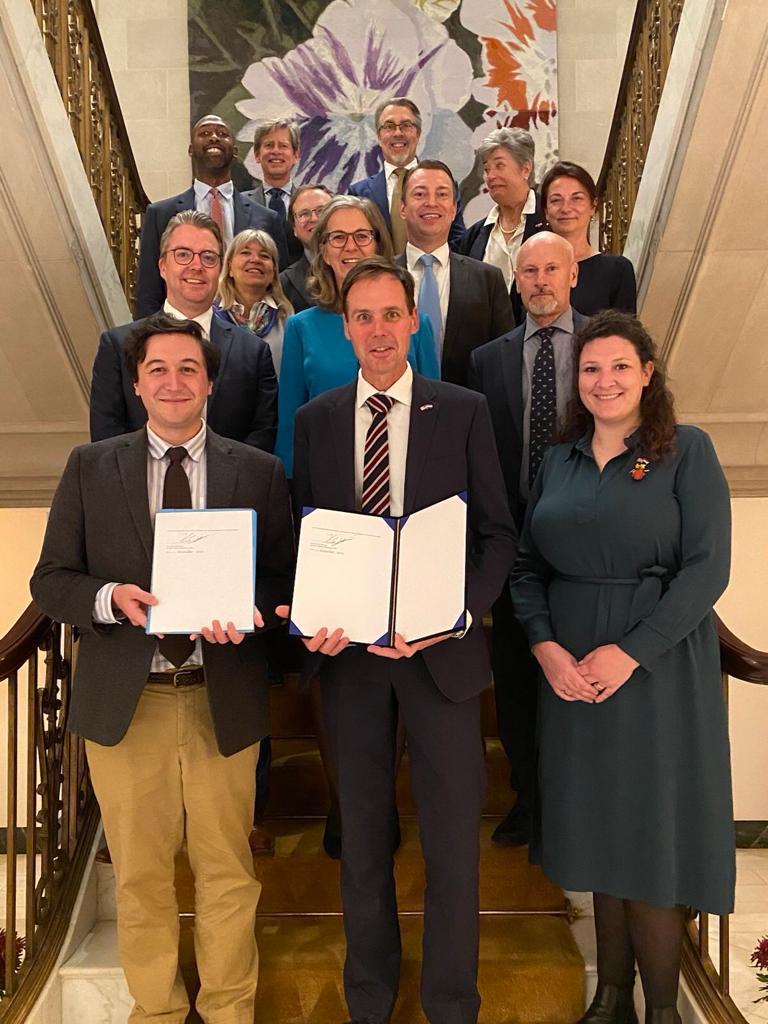
As the project matured, it also started to connect to a broader international context. Through its vision and collaborations, Lunar Zebro contributed to strengthening the position of the Netherlands in future lunar exploration. This was part of the wider developments that led to the Netherlands becoming a signatory of the Artemis Accords, an international framework initiated by NASA for cooperation in exploring the Moon and beyond. Our science director, Alessandra Menicucci, was involved in this process, reflecting how research projects like Lunar Zebro can connect to developments at an international level.
Today, Lunar Zebro is both a research platform and a mission concept. It is used to explore how small, cooperative robots can be applied in space, while also continuing to evolve through new student contributions. The project shows that innovation does not always start with large systems or fully defined missions. Sometimes it starts with a simple idea, a small prototype, and a group of people willing to keep improving it step by step.